

✨ Last Updated on February 11th, 2026 by SuperGuardZ Editorial Team
Is your car’s dashboard display becoming a roadmap of oily fingerprints, micro-scratches, and blinding sun glare? Modern vehicles rely heavily on touchscreens for purposes ranging from GPS navigation to climate control. These displays are expensive but surprisingly fragile. A high-quality Best Car Navigation Screen Protector is no longer an optional accessory. It is a necessity for maintaining visibility and vehicle value. At SuperGuardZ, we recommend precision-fit solutions. These feature oleophobic coatings. The bubble-free technology ensures your infotainment system remains as pristine as the day you drove it off the lot.
Why You Need a Car Navigation Screen Protector
Your vehicle’s infotainment system is the “brain” of your driving experience. However, unlike your smartphone, which stays in your pocket, your car touch screen protector faces harsh UV rays. It also encounters fluctuating temperatures and abrasive dust.

1. Prevent Scratches & Micro-Abrasions
Even small dust particles on your fingertips can act like sandpaper over time. Frequent swiping leads to micro-abrasions that dull the screen’s clarity. A tempered glass car navigation screen cover serves as a sacrificial layer. It absorbs the impact and friction. Without it, these factors would permanently damage the OEM glass. Replacing an entire infotainment unit can cost anywhere from $1,200 to $5,000. The exact cost depends on the make and model. A protector is a fraction of that cost.
2. Reduce Glare & Reflections
Sunlight hitting a glossy screen at the wrong angle can make your GPS completely invisible, creating a serious safety hazard. Anti-glare protectors use a matte finish to diffuse light. This allows you to see your maps clearly even in direct midday sun. This is especially critical for vehicles with panoramic sunroofs where light enters from multiple angles.
3. Preserve Resale Value
When it comes time to trade in or sell your vehicle, the condition of the interior is paramount. A scratched, delaminating navigation screen can knock hundreds of dollars off your car’s valuation. Keeping it protected ensures the interior looks “like new.” Dealerships often look at the screen first to judge how well the previous owner maintained the vehicle’s electronics.
4. Fingerprint & Dust Resistance
Most modern protectors feature an oleophobic (oil-repellent) coating. This significantly reduces the visibility of fingerprints and makes cleaning much easier. If you are wondering about maintenance, you might ask, how do I clean my car navigation screen? Using a protector makes this process safer and less frequent.
Top-Rated Car Navigation Screen Protectors – What Makes Them Stand Out
Not all protectors are created equal. To be considered “top-rated,” a product must balance durability with high-fidelity touch sensitivity. Here is what defines the gold standard in screen protection:
- ✅ Precision Laser-Cut Fit: High-end protectors are tailored to specific vehicle models rather than being “universal” sheets that require trimming.
- ✅ 9H Tempered Glass Hardness: This is the industry standard for scratch resistance. It can withstand direct contact with keys or metal tools.
- ✅ Advanced Anti-Glare Matte Technology: Specifically designed for automotive environments to kill reflections without blurring the text.
- ✅ Touch Sensitivity Preserved: A thickness of 0.33mm is usually the “sweet spot”—thick enough for protection but thin enough that the screen responds instantly.
- ✅ Automatic Adsorption: High-quality silicone adhesives allow the protector to “self-install” by pushing air out automatically, ensuring a bubble-free finish.

Types of Car Screen Protectors (Choose the Right One)
Selecting the right material depends on your driving habits and the climate you live in. Here is an in-depth look at the three primary categories.
1. Tempered Glass (The Premium Shield)
Tempered glass is treated with controlled thermal or chemical treatments to increase its strength. It is the most popular choice for modern high-resolution displays.
- Pros:
- Superior impact resistance (9H hardness).
- Maintains the original “glass feel” of the screen.
- Exceptional clarity with 99.9% light transmittance.
- Easiest to clean due to high-quality oleophobic coatings.
- Cons:
- Can be reflective if it doesn’t have an anti-glare coating.
- Thicker than film, which might be noticeable on some flush-mounted screens.
- Can crack under extreme pressure (though it protects the screen underneath).
- Best For: Luxury vehicle owners and those who want the highest level of scratch and crack protection.
- Why: It provides a “sacrificial” layer that feels identical to the factory glass but is much cheaper to replace.

- NOT EDGE TO EDGE DESIGN, FOR 2014-2019 2020 2021 SILVERADO 1500 / 2500HD /3500HD 8 Inch accessories, NOT for 7 Inch, Tem…
- 0.26MM Thickness, 2.5D Round Edge delicate touch, 99% transparency to retain original color and natural viewing experien…
- 9H Hardness Highly durable and scratch resistant, firm protect,Shatterproof
2. Anti-Glare Matte (The Driver’s Choice)
Anti-glare protectors use a specialized “frosted” texture to scatter light. Many users wonder, do anti glare screen protectors work? In a car, they are arguably the most important safety upgrade you can make.
- Pros:
- Eliminates 90% of sun reflections and glare.
- Completely hides fingerprints and oily smudges.
- Provides a smooth, satin-like touch experience.
- Reduces eye strain during long daytime drives.
- Cons:
- Slightly reduces the sharpness/vibrancy of the display.
- Can have a “grainy” appearance on ultra-high-definition screens.
- Best For: Drivers in sunny regions (Florida, Arizona, California) or those with convertibles.
- Why: It solves the #1 problem with car screens: visibility. If you can’t see your GPS, the screen is useless.

- Custom Design: This Wrangler screen protector is designed for a 2018-2023 Wrangler JL Unlimited, Sahara, Sport S, Rubico…
- Scratch Resistant & Hide Existing Scratches: Wrangler Gladiator screen protector 9H hardness prevents the display from s…
- Keep the Screen Protected: The Wrangler Gladiator screen protector maintains the original viewing experience. It maintai…
3. Clear HD Film (PET/TPU)
These are made of thermoplastic polyurethane (TPU) or polyethylene terephthalate (PET). They are flexible, thin, and very affordable.
- Pros:
- Ultra-thin and nearly invisible.
- “Self-healing” properties (TPU) can make small scratches disappear over time.
- Best for curved or non-flat screens.
- The most budget-friendly option.
- Cons:
- Zero impact protection (won’t stop a crack).
- Prone to “orange peel” texture.
- Can yellow over time due to UV exposure.
- Best For: Budget-conscious drivers or older vehicles with curved plastic screens.
- Why: It provides a basic layer of protection against dust and fingernail scratches without changing the look of the dash.
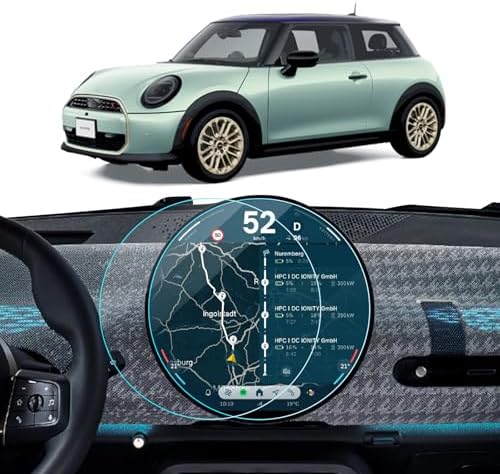
- [𝟐-𝐏𝐚𝐜𝐤 𝐨𝐟 𝐍𝐚𝐧𝐨 𝐅𝐢𝐥𝐦𝐬] Confirm your screen size with Picture 2 before buying. LANTU Nano plastic Screen protector is des…
- [𝐋𝐞𝐬𝐬 𝐅𝐢𝐧𝐠𝐞𝐫𝐩𝐫𝐢𝐧𝐭𝐬] Nano Protective film effectively prevents fingerprints and smudges, keeping your 2024 2025 2026 Mini…
- [𝐄𝐧𝐡𝐚𝐧𝐜𝐞𝐝 𝐕𝐢𝐬𝐮𝐚𝐥𝐬] Achieve crystal-clear visuals and vibrant colors with our 99% HD clarity and ultra-thin 0.26mm screen…
Expert Comparison Tables
Performance Rating by Material
Climate & Environment Recommendations
Technical Specifications Comparison
| Specification | Premium Glass | Standard Film |
|---|---|---|
| Hardness Scale | 9H | 3H – 4H |
| Thickness | 0.33mm | 0.12mm |
| Adhesive Type | Full AB Glue | Static Cling |
| Edge Profile | 2.5D Rounded | Flat |
| UV Protection | Yes | Minimal |
Installation – Bubble-Free in Minutes
The biggest fear most car owners have is trapped dust or air bubbles. However, modern automotive protectors are designed for easy DIY installation.
Step-by-Step Explanation:
- The “Steam” Prep: If possible, install the protector in a humid environment or after a light rain. Moisture in the air helps settle dust particles so they don’t land on your screen during the process.
- Clean Thoroughly: Use the provided alcohol prep pad to remove all oils. Follow up with a microfiber cloth.
- Dust Removal: Use the “dust-absorber” sticker to pick up every single tiny speck. Even one grain of dust will cause a bubble.
- Alignment: Use “hinge stickers” or suction cups to align the protector before peeling off the backing.
- The Drop: Let the protector touch the center of the screen. Watch as the silicone adhesive spreads automatically.
Pro Tips for a Perfect Installation:
- Turn off the Car: A black, powered-down screen makes it much easier to see dust and alignment issues.
- Avoid Paper Towels: Never use paper towels to clean the screen; they leave behind tiny fibers that cause bubbles.
- Use a Credit Card: If a small bubble remains, wrap a credit card in a microfiber cloth. Gently push the air toward the nearest edge.

Compatibility (Universal + Custom Fit)
Compatibility: Finding the Perfect Match (Universal vs. Custom Fit)
When investing in the Best Car Navigation Screen Protector (Anti-Glare, Tempered & Scratch Protection), the most critical step is ensuring a 100% precise fit. Automotive displays are not standardized like smartphones; they feature unique curvatures, recessed bezels, and integrated physical controls that require specialized engineering.
1. OEM Navigation Screens (The Precision-Fit Standard)
Original Equipment Manufacturer (OEM) screens—those installed by brands like Tesla, Ford, Toyota, Honda, and BMW—are designed as integral parts of the dashboard. Because these screens often incorporate light sensors (for auto-dimming) and physical volume or tuning knobs, a “one-size-fits-all” approach simply won’t work.
- Why Custom Fit Matters: A protector that is even 1mm too large will overlap with the plastic dashboard trim, causing the edges to “lift” and create permanent air bubbles. Conversely, a protector that is too small leaves a gap where dust and grit can accumulate, eventually scratching the edges of your factory glass.
- Sensor Integration: High-end custom-fit protectors feature precision laser-cutouts for ambient light sensors. If these sensors are covered by a low-quality protector, your screen may fail to brighten during the day or dim at night, creating a significant safety hazard.
- Popular Custom Fits: We specialize in recommendations for the Tesla Model 3/Y 15-inch display, Ford’s Sync 4 12-inch vertical screens, and Toyota’s high-definition infotainment systems.
2. Aftermarket Displays (Android Auto & Apple CarPlay)
If you have upgraded your vehicle’s technology with an aftermarket head unit, you probably have standardized screen sizes. Brands like JVC, Pioneer, Kenwood, Alpine offer such options. Many of these brands offer head units with standardized screen sizes. These units typically follow a “Double DIN” or “Floating Display” format.
- Standard Sizing: Most aftermarket units come in 7-inch, 8-inch, 9-inch, or 10.1-inch diagonal measurements. However, the aspect ratio (the relationship between width and height) can vary between 16:9 and 4:3.
- The Measurement Rule: To find the right fit, first measure the viewable glass area. Measure it diagonally from the top-left corner to the bottom-right corner. Do not include the plastic frame (bezel) in your measurement. Only include it if the entire front of the unit is a single sheet of glass.
- Expert Tip: For “floating” style screens (like the Alpine Halo series), we highly recommend Tempered Glass over film. The exposed edges of a floating screen are more susceptible to side-impact chips.
3. Upgrading Your Tech: The “Protection First” Rule
Many owners of classic or older vehicles are now choosing to modernize their interiors. If you are currently driving an older model, you might be considering a technology overhaul. You might be asking yourself, can I put navigation system in my car?
The answer is almost always yes—but with a caveat. Modern capacitive touchscreens in upgrade kits offer greater sensitivity. They are more fragile than the old-school resistive plastic screens of the early 2000s. If you decide to install a new navigation system, make a high-quality screen protector your first secondary purchase. Install the protector before the head unit is fully mounted in the dash. This timing makes it easier to ensure a dust-free application. This approach helps achieve a perfectly centered application.
Compatibility Quick-Check Table
| Screen Type | Best Protector Choice | Key Consideration |
|---|---|---|
| Tesla / Rivian / EV | Custom-Fit Tempered Glass | Must account for high-heat cabin temperatures. |
| Trucks (F-150 / RAM) | Anti-Glare Matte | Large vertical screens catch maximum sun glare. |
| Aftermarket (Pioneer/Sony) | Universal 7″ or 9″ Glass | Check if the screen is “Capacitive” or “Resistive.” |
| Luxury (Mercedes/Audi) | Multi-Piece Custom Kits | Often requires separate protectors for the driver display and center console. |
Pro Tip for Owners: Before ordering, always check your vehicle’s trim level. A “Toyota RAV4 LE” may have a 7-inch screen, while the “RAV4 Limited” may feature a 10.5-inch display. Knowing your specific trim ensures you get the right dimensions the first time.
Expert Recommendations: What to Look For
When shopping, look for these “Trust Signals” to ensure you aren’t buying a cheap piece of plastic:
- Thermal Resistance: Car interiors can reach 160°F. Ensure the protector is rated for “Automotive Use” so the adhesive doesn’t melt.
- 2.5D Curved Edges: This means the edges are tapered, preventing them from catching on your finger or chipping.
- Shatter-Proof Layer: If the glass breaks, it should stay in one piece. This prevents scattering shards into your vents and upholstery.
Protect Your Car’s Navigation Screen Today: A Small Investment for Total Peace of Mind
Your car’s infotainment system is no longer just a radio; it is the high-tech command center of your vehicle. This screen controls your climate and monitors vehicle diagnostics. It also helps in navigating complex interchanges via GPS. It is the most used interface in your car. It is also one of the most expensive components to repair. A single accidental scratch from a ring can result in a repair bill. A crack from a flying object during a sudden stop can also lead to expensive repairs. Gradual degradation from UV rays can lead to costs. These costs may range from $1,500 to over $5,000, depending on your vehicle’s make and model.
Leaving such a vital piece of technology unprotected is a risk you don’t need to take. You might want to kill the blinding midday glare that makes your maps invisible. Or you might want to ensure a cracked screen never ruins your day. There is a precision-engineered solution waiting for your vehicle.

Why Thousands of Drivers Trust SuperGuardZ Recommendations:
- Cost-Effective Insurance: The cost is less than a tank of gas. Yet, you are shielding a multi-thousand dollar piece of hardware.
- Enhanced Driving Safety: By choosing an anti-glare matte finish, you eliminate reflections that cause eye strain and distracted driving.
- Preserved Aesthetic: Keep that “showroom shine” on your dashboard. When it’s time to trade in your car, a pristine screen is a major selling point. It proves the vehicle was meticulously maintained.
- Seamless Integration: Our recommended protectors are so thin and clear. Most passengers won’t even realize they are there. That is until they save your screen from a potential disaster.
Final Decision Guide: Which One Should You Click?
If you are still undecided, follow this expert rule of thumb:
- Choose HD Tempered Glass if you want the most premium, smooth-to-the-touch feel and live in a climate with moderate sunlight. It offers the absolute best impact protection.
- Choose Anti-Glare Matte if you frequently drive with the windows down, have a sunroof, or live in high-sunlight states. It is the gold standard for visibility and fingerprint resistance.
Don’t wait for the first permanent gouge to appear on your display. Once a screen is scratched, there is no “buffing it out”—replacement is the only option. Take proactive steps today to shield your technology. Enhance your safety, and preserve your car’s interior beauty for years to come.
Ready to upgrade your driving experience? Select your option below to get started:
✅ [Buy Now – Top Rated Car Screen Protectors (Affiliate Link)]
Receive the industry-leading 9H hardness. Oleophobic protection is delivered to your door.
✅ [Shop Installation Kits & Pro Cleaning Supplies]
Everything you need for a professional, bubble-free finish in under five minutes.
Expert Recommendation:
“In my years of reviewing automotive tech, the screen protector is the single most underrated accessory. I’ve seen $80,000 trucks with screens ruined by simple dust abrasion. If you just bought a new vehicle, do not drive another mile without a protector. It’s the smartest $25 you’ll ever spend on your car.” — Senior Tech Contributor, SuperGuardZ
FAQ
Do car navigation screens have tempered glass?
Most factory-installed car navigation screens are made of “strengthened glass” or high-durability plastic. However, they are rarely as hard as 9H tempered glass. Adding an aftermarket tempered glass protector provides an extra layer of safety. Manufacturers often omit this to save on production costs, leaving the screen vulnerable to scratches from rings, keys, and dust.
Does sapphire glass need a screen protector?
While sapphire glass is incredibly hard and scratch-resistant, it is also brittle. This means that while it won’t scratch easily, it can shatter or crack upon impact. A tempered glass protector acts as a shock absorber. It helps to dissipate the energy from a direct hit. This energy might otherwise destroy the expensive sapphire layer. For more details, see our article on does sapphire glass need a screen protector.
Will a screen protector affect touch response?
No, provided you choose a high-quality protector with a thickness between 0.26mm and 0.33mm. These are precision-engineered to maintain the electrical conductivity required for modern capacitive touchscreens. Your swipes, pinches, and haptic feedback responses will remain as fluid as they were on the bare screen.
Is anti-glare better for cars?
In most cases, yes. Unlike a smartphone, which you can tilt to avoid reflections, car screens are fixed in a vertical position. This makes them highly susceptible to blinding glare from the sun or panoramic sunroofs. An anti-glare (matte) protector diffuses light, significantly improving safety and readability in all lighting conditions.
Can I remove the protector later?
Yes. Quality protectors use a “dry” silicone adhesive that relies on static and suction rather than sticky glue. This ensures that the protector leaves zero residue behind. If the protector gets cracked, you can easily peel it off. If you are selling the car, you can do the same. Your original screen will be in the same pristine condition as when you first covered it.
Can I use a standard tablet screen protector for my car?
It is not recommended. Car interiors experience extreme temperature fluctuations, often reaching over 160°F (71°C) when parked in the sun. Standard tablet or phone protectors are not rated for these temperatures and may bubble, peel, or even melt. Automotive-grade protectors use specialized high-heat silicone adhesives designed to withstand these harsh conditions.
How do I find the correct size for my car navigation screen?
The most accurate way is to search by your car’s Year, Make, and Model. This is more precise than searching by just the screen’s diagonal inch size. For example, an “8-inch” screen in a Ford may have different dimensions. The corner radii may also vary compared to an “8-inch” screen in a Toyota. Custom-fit protectors are laser-cut to match the exact bezel and knob placements of your specific dashboard.
Is it worth getting a screen protector for a leased car?
Absolutely. Lease return inspections are notoriously strict regarding the interior condition. Scratches or delamination on the infotainment screen can be classified as “excessive wear and tear.” This can lead to hundreds of dollars in repair fees. A $20 protector is a smart insurance policy to ensure you get your full deposit back.
How do I fix bubbles that appear after installation?
If you see air bubbles, take a credit card. Wrap it in a microfiber cloth. Gently push the air toward the nearest edge. If a bubble won’t move, there is likely a tiny speck of dust trapped underneath. In this case, gently lift the corner of the protector with a piece of tape. Use another piece of tape to “grab” the dust off the adhesive. Let it settle back down.
Does a screen protector hide existing scratches?
Yes, to an extent. The silicone adhesive layer on a tempered glass protector can “fill in” minor micro-scratches on the original screen. This makes them nearly invisible once the protector is applied. However, deep gouges or cracks in the factory glass will still be visible.
Final Thoughts: Why Your Dashboard Deserves Professional Protection
In the modern era of smart mobility, your vehicle’s infotainment screen is no longer a luxury. It is your primary window to the world. It is the interface through which you manage your safety alerts, real-time GPS navigation, hands-free communication, and digital entertainment. As car manufacturers move away from physical buttons toward all-glass cockpits, the vulnerability of your interior has never been higher.
Installing the Best Car Navigation Screen Protector (Anti-Glare, Tempered & Scratch Protection) is a wise choice. It is perhaps the most cost-effective “insurance policy” you can buy for your vehicle. For a negligible investment, you are shielding a component that can cost thousands of dollars to replace. Beyond the financial logic, there is the undeniable benefit of daily comfort. You won’t have to squint through blinding sun glare during your afternoon commute. You won’t need to wipe away greasy fingerprints every time you park. You will avoid heart-sinking moments. You won’t suddenly notice a passenger’s ring or a child’s toy has left a permanent gouge on your dash.
The “SuperGuardZ” Expert Verdict
If you are still on the fence about which material to choose, consider your environment:
- For the Perfectionist: Choose 9H Tempered Glass. It offers the most premium, “invisible” feel and the highest level of impact protection.
- For the Daily Commuter: Choose Anti-Glare Matte. The safety benefits of a reflection-free screen are unparalleled, especially during sunrise and sunset drives.
Don’t Wait for the First Scratch
The reality of automotive glass is that it doesn’t take much to cause damage. A single grain of abrasive dust trapped under a cleaning cloth can leave a lasting mark. An accidental swipe with a set of keys can also cause damage that lasts for the life of the vehicle. Once a screen is scratched, the damage is permanent. If the factory anti-reflective coating begins to delaminate, the damage cannot be quickly fixed.
Act now to keep your “window to the world” clear. Ensure it remains as responsive and beautiful as the day you drove your car off the showroom floor. Shield your technology today, preserve your car’s resale value, and enjoy a clearer, safer, and more focused driving experience.
Summary of Benefits: At a Glance
| Benefit | Why It Matters |
|---|---|
| Financial Savings | Prevents $1,500+ in screen replacement costs. |
| Enhanced Safety | Eliminates sun glare that can obscure navigation maps. |
| Resale Value | Keeps the interior looking “Mint Condition” for future buyers. |
| Ease of Use | Oleophobic coatings make cleaning a 5-second task. |
| Durability | 9H Hardness resists scratches from keys, rings, and dust. |


